Chengdu and Chongqing Itinerary: Pandas, Hotpot, and Night Views
By Alex Chen
Published October 7, 2026 · Updated October 7, 2026

Ready to plan your trip?
WhatsApp, email, or our trip inquiry form—usually within 24 hours.
Overview
Do both: five days covers Chengdu and Chongqing (three days in Chengdu, two in Chongqing), six to seven with Leshan, Sanxingdui, or Wulong. High-speed trains from Chengdu East take about 1 h on the fastest runs and 1 h 15 min–2 h on most. Pick Chengdu alone for pandas and teahouses, Chongqing alone for night views and hotpot. Book the Panda Base (real-name, up to 14 days ahead) before you fly. China Travel X: private custom, small groups, no forced shopping stops; pricing on request.
Key takeaways
- Five days covers both cities: three in Chengdu, two in Chongqing. Six or seven days adds Leshan, Sanxingdui, or Wulong.
- More than 100 high-speed trains a day run from Chengdu East to Chongqing. The fastest take about an hour (Shapingba 1 h 02 min, Chongqing West 1 h 06 min); most take 1 h 15 min to 2 h.
- Panda Base tickets are real-name and timed, open 14 days ahead, and sell out. Go for the morning slot (from 7:30, March–October).
- Hongyadong lights were 19:30–23:00 in early October 2026; on public holidays the surrounding roads go under traffic control from 16:00. Use the metro.
- Avoid July–August in Chongqing (official 40 °C+ alerts in July 2026). March–May and September–November are the comfortable windows.
Planning advice
17 min read
A Chengdu and Chongqing itinerary works best as one trip, not a choice: give it five days at minimum (three in Chengdu, two in Chongqing) and six to seven if you want a day trip. The cities are about an hour apart on the fastest high-speed trains, and most trains take 1 h 15 min to 2 h. If you can fit only one, Chengdu is the easier first city; Chongqing is the more dramatic one.
China Travel X plans this pair as private custom trips or small groups of your own, with no forced shopping stops. We can hold the trains, hotels, and flights inside the journey; we are not an online ticket shop. Day counts for the whole of China live on How many days in China. This page is the Sichuan–Chongqing block itself: which city, how many nights each, how to cross between them, and what goes wrong for first-timers.
Key Takeaways
- Both, if you have five days. Three days in Chengdu and two in Chongqing is the core. Add a sixth or seventh day for Leshan, Sanxingdui, or Wulong.
- The train is the easy part. More than 100 high-speed trains a day link Chengdu East with Chongqing. The fastest take about an hour; most take 1 h 15 min to 2 h. Choose the Chongqing station by where you sleep.
- Book the Panda Base before you fly. Every visitor needs a real-name, timed ticket. Booking opens 14 days ahead, closes when the daily quota is gone, and uses your passport.
- Chongqing is a night city with a crowd problem. Hongyadong's lights were set at 19:30–23:00 when we checked in early October 2026. On holidays, the roads around it go under traffic control from 16:00.
- Avoid July–August if you can. Chongqing posted official 40 °C-plus heat alerts in July 2026. March–May and September–November are the comfortable windows.
Chengdu or Chongqing for a first trip
Short answer: if you only have time for one, choose Chengdu. It is calm and easy to land in. The pandas are a morning, the teahouses an afternoon, and Leshan, Sanxingdui, and Dujiangyan are all within a day trip. Choose Chongqing instead if you want the city itself to be the attraction: a hillside of stacked streets, rivers lit up at night, monorails running through buildings, and hotpot built on beef tallow and chilli. Chongqing asks more of you, with stairs everywhere, big crowds on weekend evenings, and addresses that make sense only in three dimensions. With five days or more, the question goes away: do both, Chengdu first, and fly out of Chongqing. The two cities are about an hour apart by high-speed train, so combining them costs you half a day, not a full travel day.
Chengdu (成都) is the provincial capital of Sichuan: flat, spread out, and slower than its size suggests. People go for the Chengdu Research Base of Giant Panda Breeding (成都大熊猫繁育研究基地), the teahouses in People's Park (人民公园), the restored Qing-era lanes of Kuanzhai Xiangzi (宽窄巷子, the Wide and Narrow Alleys), and the food. Chengdu was named a UNESCO City of Gastronomy in 2010, and it eats like one. It is an easy first city after a long-haul flight. A recurring line in traveller forums is that Chengdu was meant to be the rest stop and became the reason for the trip. The panda morning is short; the teahouse afternoons are what people remember.
Chongqing (重庆) is a separate municipality, not part of Sichuan. It is built on steep ground where the Jialing River meets the Yangtze. Streets stack on top of each other, and a ground-floor entrance can be on the 22nd floor: Kuixing Building (魁星楼) is the usual example. The city's best-known images are Hongyadong (洪崖洞), the stilted complex lit gold above the Jialing; Liziba (李子坝), where a Line 2 monorail runs through floors six to eight of a residential tower; and the Yangtze River Cableway. Chongqing hotpot is the beef-tallow, nine-grid (九宫格) version, and it is hotter than most Chengdu tables.
Which one, if you must choose:
- Chengdu — pandas, tea culture, a gentler pace, more day-trip options (Leshan, Sanxingdui, Dujiangyan), and streets that are easier on knees and luggage.
- Chongqing — skyline and night views, a city that feels unlike anywhere else in China, serious hotpot, and stairs. Lots of stairs.
For most first-timers the honest answer is both, Chengdu first. Land somewhere calm, then end with Chongqing's night city, and fly home from Chongqing Jiangbei (CKG) instead of backtracking.

How many days for Chengdu and Chongqing
Short answer: five full days on the ground covers Chengdu and Chongqing properly, with three days in Chengdu and two in Chongqing. That is enough for a morning at the Panda Base, a slow teahouse afternoon, Kuanzhai Xiangzi, the high-speed train east, Hongyadong at night, Liziba, the Yangtze River Cableway, and at least two hotpot dinners. Six or seven days lets you add one or two day trips: the Leshan Giant Buddha or the Sanxingdui Museum from Chengdu, or Wulong Karst from Chongqing. Chengdu on its own needs about three days, and Chongqing on its own two to three. Count full days on the ground, not the days you spend flying in and out. Do not stretch this block to include western Sichuan's mountains; that is a separate week of driving. These are the splits we use when the pair sits inside a longer China trip:
| Days | Split | Best for |
|---|---|---|
| 3 | Chengdu only | Pandas, teahouses, food; a 10-day China trip that swaps out a city |
| 2–3 | Chongqing only | Night views and hotpot as a stopover |
| 5 | 3 Chengdu + 2 Chongqing | The core pair without day trips |
| 6–7 | 5-day core + 1–2 day trips | Leshan or Sanxingdui from Chengdu, Wulong from Chongqing |
Two days in Chongqing is enough for Hongyadong at night, Liziba, the cableway, and one long hotpot dinner. Three days in Chengdu leaves a full morning for pandas, an afternoon in a teahouse, and one evening you have not planned. Each day trip adds a full day; do not try to fit Leshan or Wulong into a travel day.
What this block is not is western Sichuan. Kangding, Danba, and the high passes past Chengdu are a separate road-trip region that needs its own week or more. See the Western Sichuan hub and Driving across western China before you add mountains to a panda-and-hotpot trip.
Getting between Chengdu and Chongqing by high-speed rail
The trains run from Chengdu East (成都东) to three main Chongqing stations. On 12306 for a mid-October 2026 date, Chengdu East showed more than 100 bookable trains a day to Chongqing, from about 06:00 to after 22:00:
- Shapingba (沙坪坝) — the fastest, at about 1 h 02 min, with fewer departures. Metro Lines 1 and 9 and the Loop Line meet here; Line 1 runs to the Jiefangbei area. Ciqikou old town is in the same district.
- Chongqing West (重庆西) — the most trains. The fastest take about 1 h 06 min, but most take 1 h 15 min to 2 h 10 min. It sits farther out and taxi queues can be long.
- Chongqing North (重庆北) — useful for Jiangbei hotels and the airport side of the city. Many trains here are slower D services, so expect around 1.5 to 2.5 hours.
Book with your passport on 12306 or let your planner book it. Outside public holidays, a day or two ahead usually works. Around the October National Day week and Chinese New Year, book as early as sales open. Tickets are electronic; foreign passports go through the staffed gate if the automatic gate does not read them. A new Chengdu–Chongqing central line is under construction, so check times again close to travel.
A car door-to-door takes roughly three to four hours. It is only worth it when you are stopping on the way (the Dazu Rock Carvings, for example), or you have a lot of luggage and small children.
A 5–7 day Chengdu–Chongqing flow
This is a shape, not an hour-by-hour plan. Fly into Chengdu Tianfu (TFU) or Shuangliu (CTU) and out of Chongqing Jiangbei (CKG), or reverse it. Tianfu is the newer and more distant of the two Chengdu airports, so check which one your flight uses before you book a hotel across town.
Day 1 — Arrive in Chengdu. No sightseeing list. Walk People's Park, sit at Heming Teahouse (鹤鸣茶社) with a gaiwan of tea, and eat early. A first hotpot in Chengdu can be a split yuanyang pot (鸳鸯锅): one side spicy, one side not.
Day 2 — Pandas first, then slow down. Arrive at the Panda Base for the morning slot. From March to October morning entry runs 7:30–12:00; from November to February it is 8:00–12:00. In warm weather the pandas are much less active by late morning. Spend the afternoon at Wenshu Monastery (文殊院) or back in a teahouse. Walk Kuanzhai Xiangzi in the evening; it is busy, so go for the architecture and the walk, not for shopping.
Day 3 — One Chengdu day trip. Choose one:
- Leshan Giant Buddha (乐山大佛) — the fastest trains from Chengdu East reach Leshan in under an hour, then allow 30–40 minutes by road to the site.
- Sanxingdui Museum (三星堆博物馆) — a short high-speed hop to Guanghan, then a local transfer. The bronze masks are the draw. Book the timed ticket in advance with your passport.
- Stay in the city — the right choice if Day 2 ran late or the weather is grey.
Day 4 — Train to Chongqing. Take a mid-morning train to Shapingba or Chongqing West, check in, and spend the afternoon at Liziba. The viewing platform is outside the fare gates: leave by Exit 2 and follow the signs for 观景台. You do not need a metro ticket to watch. After dark, see Hongyadong lit from Qiansimen Bridge (千厮门大桥) or the Jiangbei riverbank, not from inside the complex.
Day 5 — Vertical Chongqing. Ride the Yangtze River Cableway early. Tickets are sold same-day through the official 长江索道 WeChat account and come with a queue number; a one-way ride from the south bank is usually quicker than a return. Walk Kuixing Building and the Jiefangbei streets, look out from Eling Park (the glass skywalk is ticketed), and book a proper nine-grid hotpot. Ask for 微辣 (wēi là, mildly spicy) unless you know what you are doing.
Day 6 (optional) — Wulong Karst. Since the Chongqing–Hunan high-speed line opened on 27 June 2025, Chongqing East to Wulong South (武隆南) takes about 35–40 minutes on the fastest trains. Then there is a scenic-line coach of roughly 45–50 minutes to the Xiannüshan visitor centre, and a park shuttle to the Three Natural Bridges (天生三桥). The deadline is the last coach back to the station, around 17:30–18:00, not the park's closing time. Wulong South also has direct trains toward Zhangjiajie, if you are continuing to Zhangjiajie and Guizhou.
Day 7 — Fly out of Chongqing, or use the spare day for Ciqikou (磁器口), a Two Rivers night cruise, or nothing at all.


When to go: heat, fog, and holiday crowds
Best windows: March to May and September to November. Both cities are mild and humid then. Pack layers and a small umbrella; Chengdu autumn is often grey and damp rather than sunny.
July and August are hard in Chongqing. In late July 2026 the municipal government issued high-temperature alerts, with forecasts of 40–42 °C in many districts. Hongyadong at 21:00 is still warm then. If summer is your only option, sightsee early, keep afternoons indoors, and save the riverfront for after dark.
Winter is quiet but murky. Chongqing is known for river fog, and both cities have long grey spells. The Panda Base keeps shorter winter hours (afternoon entry until 16:30, clearance at 17:30). Hongyadong's lights move with sunset and the operator changes the schedule several times a year.
Chinese public holidays change everything. On 2 October 2025, Hongyadong passed its maximum instant capacity just after 17:30 and stayed under crowd limits until 23:00. On holidays the roads around it come under traffic control from 16:00. The Panda Base posts holiday notices and its quotas sell out. If your dates touch the first week of October or Chinese New Year, plan for the metro, early starts, and pre-booked everything.
Bookings and entry rules that catch first-timers
Panda Base tickets. All visitors need a real-name, timed reservation (morning or afternoon slot), one ticket per passport. Booking opens up to 14 days ahead through the official WeChat account or mini program, or authorized platforms such as Trip.com, and closes when the daily quota is sold. The adult ticket was CNY 55 on the official page when we checked on 6 October 2026. Seniors 60+ and children under 6 or under 1.3 m are exempt from reservation but still need ID. Bring the passport you booked with. If you lack the original, the official page directs you to a separate lane with a photo of the document. Afternoon ticket holders should not arrive early.
Hongyadong. Entry is free. Ignore anyone selling a paid fast pass. The operator posts the lighting schedule and live crowd levels on its WeChat account. Use the metro (Xiaoshizi on Lines 1 and 6, or Linjiangmen on Line 2), especially on weekends.
Visa-free transit. If your passport is on the eligible list and you are flying on to a third country or region, the 240-hour visa-free transit policy applies at Chengdu Tianfu, Chengdu Shuangliu, and Chongqing Jiangbei. Under the NIA lists we checked, the permitted area covers all of Chongqing Municipality, so Wulong is included. In Sichuan it covers Chengdu, Deyang (where Sanxingdui is), Leshan, Meishan, Ya'an, and several other cities. It does not cover the Aba and Ganzi prefectures, which include Jiuzhaigou and the western Sichuan high country. You may cross between Sichuan and Chongqing within the permitted areas, and the 240 hours start at 00:00 the day after you arrive. Rules and country lists change, so confirm on the National Immigration Administration and our visa and entry page before you book flights. Other visa-free arrangements may suit you better; that depends on your passport.
Payments and data. Set up Alipay or WeChat Pay before the trip and carry a little cash for small stalls. Every traveler on a China Travel X private journey can choose a complimentary eSIM: 10 days / 3 GB or 15 days / 5 GB. It keeps maps, train tickets, and the WeChat ticket accounts working from the first day.
What a private trip adds in Chengdu and Chongqing
You can do this pair on your own. The trains are frequent and both metros are good. A private trip earns its cost on a few specific problems:
- Booking without a Chinese phone number. Panda Base slots, cableway queue numbers, and Hongyadong crowd updates all run through Chinese apps and WeChat accounts. We book in your passport names and confirm the slot before you land.
- Station and luggage logistics. Chongqing's three rail stations are far apart, and its hills defeat rolling suitcases. A driver meeting the train at Shapingba or Chongqing West saves the worst hour of the trip. Families with small children and travelers with bad knees feel this most.
- Evenings that work. On holiday nights a car may not get near Hongyadong. A local escort knows where the driver can wait and which bridge or riverbank gives the view without the crush.
- Day trips with three legs. Wulong is train, coach, and park shuttle, with a hard last-coach deadline. Leshan and Sanxingdui are simpler, but a car from your hotel still removes two transfers.
- Food without guesswork. A bilingual escort can order a hotpot that matches your spice tolerance, find a teahouse that is not a sales room, and handle allergies in Chinese.
- One plan, both cities. Open-jaw flights (into Chengdu, out of Chongqing), hotels in the right districts, and the train between them, booked as one journey.
What you do not get on our trips is a "Sichuan tea culture" stop, a silk-embroidery showroom, or a panda-souvenir outlet you did not ask for. If you are comparing quotes from other operators, read Private China tour vs group tour to see how shopping-stop pricing works and which escort roles to ask about.
Chengdu is also a common jumping-off point for Lhasa flights. Tibet is a separate permit process, so start with Tibet travel permits before you add it to this trip.

Send dates, arrival and departure airports, headcount, and which day trips interest you to Plan or WhatsApp +86 177 2263 6816. Email g9355080@gmail.com works if you already have flights and want the Sichuan–Chongqing days built around them. Pricing is on request; we quote the route you actually want instead of printing a package rate.
For more route ideas, browse journeys, or go back to the China hub if you are still choosing regions.
FAQ
Should I visit Chengdu or Chongqing on my first trip to China?
If you only have time for one, Chengdu is the easier first stop: it is flat and slower, with pandas, teahouses, and the most day-trip options. Chongqing is the more dramatic city, with stacked streets, river views at night, and fiery hotpot, but it is hilly and crowded. With five days or more, do both, Chengdu first, and fly out of Chongqing.
How many days do I need for Chengdu and Chongqing?
Five full days covers both: three in Chengdu, two in Chongqing. Six or seven days lets you add one or two day trips: the Leshan Giant Buddha or the Sanxingdui Museum from Chengdu, or Wulong Karst from Chongqing. Three days suits Chengdu alone; two to three suit Chongqing alone. Western Sichuan's mountains need a separate week.
How long is the train from Chengdu to Chongqing?
The fastest high-speed trains from Chengdu East reach Shapingba in about 1 hour 2 minutes and Chongqing West in about 1 hour 6 minutes. Most trains take 1 hour 15 minutes to 2 hours. There are more than 100 departures a day. Book with your passport on 12306 or through your planner, and book early around Chinese public holidays.
Do I need to book the Chengdu Panda Base in advance?
Yes. Every visitor needs a real-name, timed ticket for a morning or afternoon slot, booked up to 14 days ahead through the official WeChat channels or authorized apps such as Trip.com. The daily quota sells out, especially on holidays. Bring the passport you booked with. Go for the morning slot; pandas are most active early.
Can I visit Chengdu and Chongqing on 240-hour visa-free transit?
If your passport is eligible and you are flying on to a third country or region, you can enter at Chengdu Tianfu, Chengdu Shuangliu, or Chongqing Jiangbei. The NIA lists we checked allow travel between Chongqing Municipality and listed Sichuan cities, including Chengdu, Leshan, and Deyang, but not Jiuzhaigou or the western Sichuan prefectures. Confirm the current rules with the National Immigration Administration before booking.
Last Updated
6 October 2026 (Asia/Shanghai). Rail times checked against a 12306 sample date in October 2026 and published route guides. Panda Base hours, booking, and ticket price checked on the official panda.org.cn pages. Hongyadong lighting, Wulong access, and visa-free transit checked the same day. Timetables, lighting schedules, and entry rules change; recheck close to travel.
Sources
- Chengdu Research Base of Giant Panda Breeding, Tickets and Opening Hours pages, panda.org.cn (consulted 6 Oct 2026); 2026 National Day visiting notice
- National Immigration Administration, announcement on the 240-hour visa-free transit policy (19 Dec 2024) and visa-free transit port and permitted-area lists, nia.gov.cn
- China Railway 12306, Chengdu East–Chongqing timetable sample for October 2026, as reported by LocalKey Travel and MyChina Guide route pages (consulted 6 Oct 2026)
- Chongqing Municipal People's Government and Chongqing Emergency Management Bureau, high-temperature alerts, July 2026
- Yuzhong District notices on Hongyadong lighting hours and holiday traffic control, as summarized by route guides consulted 6 Oct 2026
- China Travel X, How many days in China — national day counts live there
- China Travel X, Private China tour vs group tour
Related destination
Explore the regional hub for practical info, seasons, and more guides.
Related guides
How Many Days Do You Need in China? 7, 10 & 14-Day Private Routes
For a first trip to China, 10–14 days on the ground is the sweet spot. Seven days works for two cities; 21 days is a deep regional add-on, not “see everything.” Private 7/10/14-day routes cover Beijing–Xi’an–Shanghai plus optional Chengdu or Zhangjiajie. Private custom or small groups, no shopping-stop tours, $180–$380 pp/day (2–6 pax). Confirm visa-free rules on the National Immigration Administration.
Private China Tour vs Group Tour: What You Actually Pay For
A private China tour buys your own vehicle, a named escort, and hours on the ground. A group tour sells a seat — and many cheap coaches rebuild the fare at jade, silk, tea, or pearl stops. Ask who is with you (guide, driver, bilingual escort, industry interpreter, or a licensed Tibet guide), not a shopping escort. China Travel X: private custom, small groups, no forced shopping stops; pricing on request.
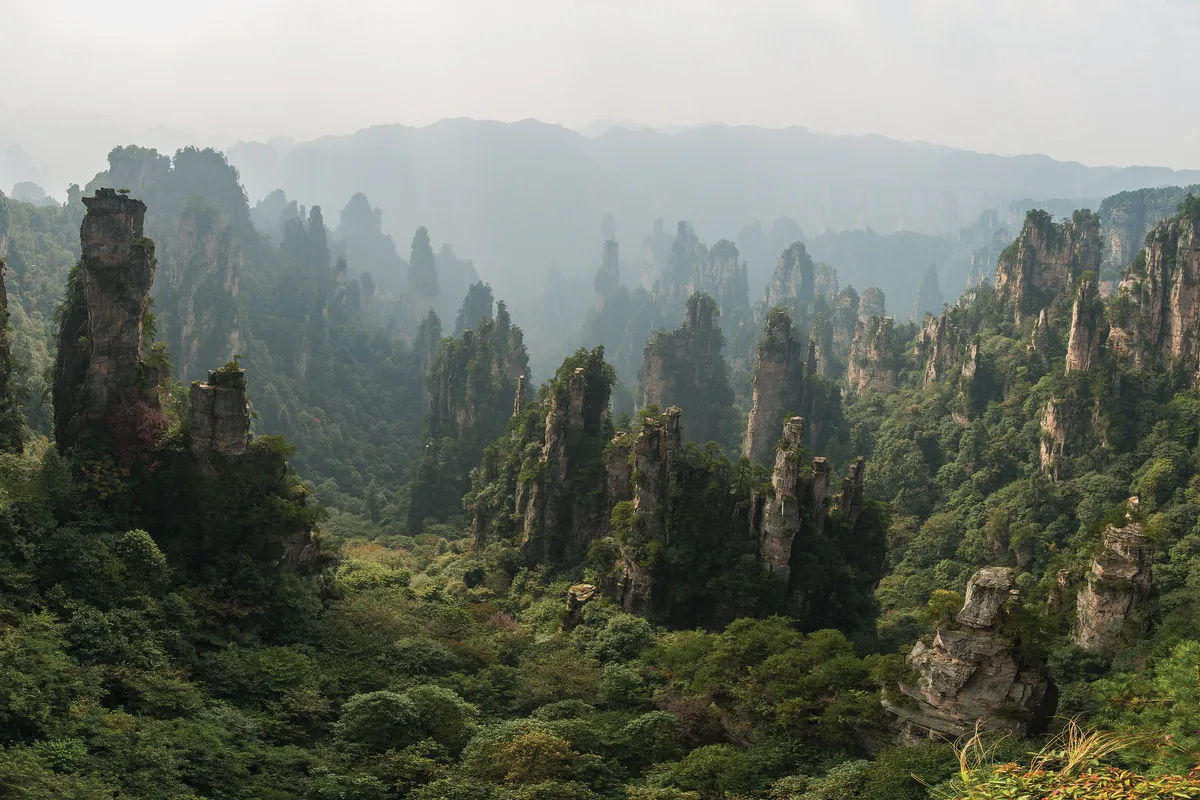
Zhangjiajie and Guizhou: Avatar Mountains Without a Shopping Tour
Plan about 3–4 full days in Zhangjiajie for the sandstone Avatar pillars, then 2–4 in Guizhou for Miao or Dong village time. Seven to nine days covers both without stacking glass bridges and shopping stops. Private custom or small groups, no shopping-stop tours. Flights and hotels can sit inside the journey. Complimentary eSIM: 10 days/3 GB or 15 days/5 GB.

Driving Across Western China
Western China driving means 350–600 km days and fuel every 180–250 km. Private driver + SUV: typically $120–$230 per day (2026), quoted per route. First-timers should hire drivers. Get a temporary Chinese driving permit 1–3 days in hub cities. Add 2–4 buffer days per fortnight.

Tibet Travel Permits Explained
Tibet requires a Travel Permit (15–25 days processing) and licensed guide—there is no independent travel in the TAR. Extra corridor permits do not change that. Budget $1,600–$3,400 for 8–10 days. Book permits before flights; acclimatize in Xining 48–72 hours before Lhasa. Everest corridor also needs an Alien Travel Permit (ATP), arranged with your guide.
Frequently asked questions
Should I visit Chengdu or Chongqing on my first trip to China?+
How many days do I need for Chengdu and Chongqing?+
How long is the train from Chengdu to Chongqing?+
Do I need to book the Chengdu Panda Base in advance?+
Can I visit Chengdu and Chongqing on 240-hour visa-free transit?+
Does China Travel X add shopping stops in Chengdu or Chongqing?+
PRACTICAL INFO
Plan your trip
Planning updates by email
Seasonal route notes, permit reminders, and new guides—no booking spam.
Want Chengdu and Chongqing planned as one trip?
Message WhatsApp (+86 177 2263 6816) with dates, arrival and departure airports, headcount, and any day trips you want (Leshan, Sanxingdui, Wulong). Private custom or your own small group. No forced shopping stops. Trains, hotels, and Panda Base slots booked inside the journey. Pricing on request.