Best Time to Visit China, Winter 2026 to Autumn 2027, and What a Private Trip Really Costs
By Alex Chen
Published October 11, 2026 · Updated October 11, 2026

Ready to plan your trip?
WhatsApp, email, or our trip inquiry form—usually within 24 hours.
Overview
Best windows: mid-April to May (not 1–5 May) and 8 October to mid-November. Avoid Spring Festival (about 5–13 Feb 2027), Labour Day (1–5 May) and National Day (1–7 Oct). Summer suits Tibet, Qinghai and high Yunnan; winter is cheapest. Planning range for a private 7-day trip, two sharing: about CNY 7,700–15,500 per person at 4-star level, before international flights. The 30-day visa-free entry for 48 countries runs to 31 Dec 2026. China Travel X: private custom, small groups, no shopping stops.
Key takeaways
- Two windows beat the rest: mid-April to May (but not 1–5 May) and 8 October to mid-November. In both, Beijing averages highs around 20 °C and the big crowds are elsewhere.
- Avoid the three holiday weeks: Spring Festival (expected around 5–13 February 2027), Labour Day (1–5 May) and National Day (1–7 October). The State Council usually publishes the official schedule in November.
- Winter is the cheapest season. The Palace Museum charges CNY 40 instead of 60 from November to March, and Jiuzhaigou drops from CNY 280 to 160 including the park bus.
- Summer belongs to the west. Shanghai and Chongqing sit near 33–34 °C in July while Lhasa averages 23 °C; the Yangtze delta's plum rains usually run from about 19 June to 10 July.
- Check entry rules for 2027 now: the 30-day visa-free entry for 48 countries runs to 31 December 2026, and no extension had been announced on 11 October 2026.
Planning advice
25 min read
The best time to visit China for most first trips is mid-April to May or 8 October to mid-November: mild in Beijing, Xi'an, and Shanghai, and outside the two big holiday weeks. Summer is the season for Tibet, Qinghai, and Yunnan's high country. Winter is cheapest, with Harbin's ice in the north and a mild south. A private trip for two, sharing rooms, runs from about CNY 7,700 to 15,500 per person for 7 days at comfortable 4-star level, before international flights.
That is the short version. The long version depends on four things we check before quoting any trip: which week the Chinese holidays land on, how hot or wet each region is that month, which tickets have a seasonal price, and how many other people will be standing in the same queue. Below we go season by season, from Winter 2026–27 to Autumn 2027. Each season gets its 2027 holiday dates and its weather by region, and the cost section at the end can be checked line by line.
China Travel X plans these trips as private custom journeys or small groups of your own, with no shopping stops. We book the hotels, trains, flights, cars, and guides inside the journey. We are not a ticket shop.
Key Takeaways
- Two windows beat the rest: mid-April to May (but not 1–5 May) and 8 October to mid-November. In both, Beijing averages highs around 20 °C and the big crowds are elsewhere.
- Avoid the three holiday weeks: Spring Festival (expected around 5–13 February 2027), Labour Day (1–5 May), and National Day (1–7 October). The State Council usually publishes the official schedule in November.
- Winter is the cheapest season. The Palace Museum charges CNY 40 instead of 60 from November to March, and Jiuzhaigou drops from CNY 280 to 160 with the bus.
- Summer belongs to the west. Shanghai and Chongqing sit near 33–34 °C in July, while Lhasa averages 23 °C. The Yangtze delta's plum rains usually run from about 19 June to 10 July.
- Check entry rules for 2027 now. The 30-day visa-free entry for 48 countries runs to 31 December 2026. No extension had been announced on 11 October 2026.
The short answer: when to go, region by region
Short answer: for a first trip that covers Beijing, Xi'an, and Shanghai, go from mid-April to the end of May, skipping 1–5 May, or from 8 October to mid-November. Daytime highs are around 20 °C in Beijing in both windows, rain is moderate, and domestic tourists are back at work. If you can only travel in July or August, shift the route west and up: Tibet, Qinghai, and northern Yunnan are at their best, while the east coast is hot and wet. Winter, from December to February outside Spring Festival, is the cheapest time and the quietest at the big sights, with cold dry days in the north and mild weather in Guangzhou, Hong Kong, and Kunming. The one period we steer almost everyone away from is the week around Chinese New Year, 6 February 2027, when the country is on the move and many small restaurants close.
| North (Beijing, Xi'an, Harbin) | East and south (Shanghai, Hangzhou, Guilin, Guangzhou) | West (Chengdu, Yunnan, Tibet, Qinghai) | |
|---|---|---|---|
| Winter (Dec–Feb) | Cold, dry, clear. Beijing January high about 3 °C; Harbin about −12 °C | Damp and cool in Shanghai (9 °C highs), mild in Guangzhou (19 °C) | Kunming 16 °C and dry; Chengdu grey; high Tibet very cold |
| Spring (Mar–May) | Best season; windy days and willow fluff in late April | Good in April; Guilin gets wetter from April | Good in Yunnan before the rains; Chengdu mild |
| Summer (Jun–Aug) | Hot, with most of the year's rain in July | Plum rains, then heat near 33–34 °C | Best time for Tibet, Qinghai, and high Sichuan |
| Autumn (Sep–Nov) | Best season; clear skies, autumn leaves | Comfortable from October | Jiuzhaigou colours in mid to late October |
Temperatures are 1991–2020 China Meteorological Administration averages for each city's main station. They are averages, not forecasts.
China's 2027 holiday calendar
Holidays matter more than weather. A clear October day at the Forbidden City goes badly if 40,000 other people hold a ticket for the same day. The lunar dates for 2027 are fixed; the official make-up working days are not. The State Council publishes them each year, usually in November (the 2026 schedule came out on 4 November 2025). The breaks below follow the holiday rules in force since 2025, which already tell you most of the shape.
| Holiday | 2027 date | Expected break | What it means for you |
|---|---|---|---|
| New Year's Day | Fri 1 Jan | 1–3 Jan | Short; city hotels busy, sights fine |
| Spring Festival (Chinese New Year) | Sat 6 Feb (Eve Fri 5 Feb) | about 5–13 Feb | Trains full for weeks around it; small restaurants close for days |
| Qingming | Mon 5 Apr | 3–5 Apr | Short break; parks and nearby sights busy |
| Labour Day | Sat 1 May | 1–5 May | One of the two worst weeks for crowds and hotel prices |
| Dragon Boat Festival | Wed 9 Jun | 9 Jun only | Under the rules, a Wednesday holiday stays a single day |
| Mid-Autumn Festival | Wed 15 Sep | 15 Sep only | Single day; does not merge with National Day in 2027 |
| National Day (Golden Week) | Fri 1 Oct | 1–7 Oct | The busiest week of the year at major sights |
Two more windows are not public holidays but change the picture. The Spring Festival travel rush runs for about 40 days around Chinese New Year; in 2026 it was 2 February to 13 March, with 9.41 billion cross-region trips. And school summer holidays fill July and August with family groups, especially at panda bases, theme parks, and cool mountain parks.
Winter 2026–27 (December to February): cheapest, quietest, and coldest
A weekday in mid-January at the Meridian Gate of the Forbidden City looks like this. You reach the gate soon after it opens at 08:30, show the passport you booked with, and pay the low-season price of CNY 40. The courtyards are wide and close to empty. The sky over Beijing is usually blue, because January is the driest month: the main station averages about 2 mm of rain or snow for the whole month. The high is about 3 °C and the low about −7 °C, so you walk fast between halls and stop for tea. When snow does fall, people drive in from across the city to photograph the yellow roofs, and the place gets busy for a day.
Six hundred kilometres east, Shanghai and Hangzhou feel colder than their numbers. Highs of about 9 °C sound easy, but the air is damp, and most buildings south of the Huai River were built without central heating. You notice it in older hotels and restaurants. Guangzhou is the opposite: about 19 °C in the afternoon in January. Kunming, at 1,888 m, has dry sunny days around 16 °C, which makes early Yunnan one of the best winter trips in the country.
Harbin is its own trip. The average January low is −22 °C, and mornings colder than −25 °C are not unusual. Our drivers keep the engine running outside the hotel, and we plan the day in outdoor blocks of 45 to 60 minutes with a warm stop in between. Phones die fast in that cold. Our Harbin or South China in December guide covers the Ice and Snow World season, the cold, and the warm alternative in detail; if you are planning Christmas in a city, see Christmas in Shanghai 2026.

The Spring Festival week
The week around 6 February 2027 is the one we plan around most carefully. Chinese New Year's Eve falls on Friday 5 February, and under the current rules the break is expected to run about nine days. Before the Eve, trains out of the big cities are sold out as soon as each day's tickets are released. On the Eve itself the cities go quiet; many people are at a family dinner and the streets are almost empty. For the first three or four days of the new year, many family-run restaurants and small shops close. Hotels and chain restaurants stay open, and temple fairs and lantern displays draw large crowds. Then the return wave begins, and trains fill again.
It can be a good trip if you want to see the festival and you book early. It is a poor choice for a first sightseeing trip, because transport is tight and some places you planned to eat at will have their shutters down.
Winter: where to go, where to skip, what it costs
- Go: Beijing and Xi'an on weekdays, Harbin from late December, Guangzhou, Shenzhen, and Hong Kong, Kunming and Dali, and Hainan if you want a beach.
- Skip or plan carefully: high Tibet and western Sichuan (cold, and some roads close in snow), Jiuzhaigou unless you want ice and quiet, and any long rail trip in the Spring Festival rush.
- Prices: the low season for many official tickets runs from November to March. The Palace Museum drops from CNY 60 to 40, and Jiuzhaigou from CNY 190 plus a CNY 90 bus to CNY 80 plus 80, from 16 November. Hotels in Beijing and Xi'an are usually at the low end of their range in January. The exception is Spring Festival, when hotels in holiday destinations such as Sanya and Harbin go to their highest prices of the year, and cars and guides are scarce because they are home with their families.
Spring 2027 (March to May): the best season in the north and east
In late February the canola fields around Luoping in eastern Yunnan turn yellow, and for about a month the terraced valleys look painted. It is one of the first signs of spring in China, and one of the few places that is better in February than in May. Further north, spring arrives in March and April. Plum and peach blossom come first; by early April the parks in Beijing, Xi'an, and Hangzhou are green.
April and the second half of May are what many guides mean by "the best time to visit China". Beijing averages about 21 °C in the afternoon in April and 9 °C at night. Shanghai is similar. Two things to know about a Beijing spring: a windy, dusty day or two is normal in March and April, and from late April the poplar and willow trees shed white fluff that drifts through the streets. Neither stops a trip, but people with allergies should pack for it.

Labour Day, 1–5 May 2027
Spring has its own holiday week. Labour Day falls on Saturday 1 May 2027 and the break is expected to run five days. During the 2026 May Day holiday, the Ministry of Culture and Tourism counted 325 million domestic trips, and hotel data firm STR reported national hotel occupancy of about 91.5% on 2 May, the highest single day of the first half of the year. Scenic towns, West Lake in Hangzhou, the Great Wall sections nearest Beijing, and the Bund all fill up.
In 2027 there is a second reason to watch these dates if you are flying into Guangzhou. The provisional dates for the 141st Canton Fair are 15 April to 5 May, with the last phase running into the holiday. Hotels near the Pazhou fair complex price for the fair, not for tourists. If you are coming for trade, see our Canton Fair 2026 buyer travel guide for how we plan around it.
Spring: where to go, where to skip, what it costs
- Go: Beijing, Xi'an, Shanghai, Suzhou, and Hangzhou from late March to May; Chengdu and Chongqing; Yunnan before the rains start in late May or June. See First-time Yunnan and Chengdu and Chongqing itinerary.
- Plan around the rain: Guilin and Yangshuo get wetter from April (about 227 mm in an average April and 449 mm in June). The Li River is still beautiful, but bring a plan for wet afternoons.
- Prices: peak-season ticket prices start on 1 April at the Palace Museum and Jiuzhaigou. Hotel rates rise from Qingming onward and peak over 1–5 May. The middle of May, between Labour Day and the summer holidays, is often the best value of the spring.
Summer 2027 (June to August): go west and high
The plum rains reach Shanghai and Hangzhou in mid-June. The 1991–2020 average is a start on about 19 June and an end on about 10 July, three weeks in which Shanghai receives around 240 mm of rain. In Hangzhou it looks like this: the hills around West Lake disappear into cloud by mid-morning, the stone paths on the causeways stay wet all day, and shoes do not dry overnight in a hotel room. It rarely rains all day without a break, so a West Lake walk still happens, just with an umbrella and a looser schedule. The 2026 season ran from 18 June to 7 July, close to normal.
After the rains comes heat. Shanghai and Chongqing average highs of 33–34 °C in July, with nights around 25–26 °C. Hangzhou is slightly hotter. Beijing is a little cooler but July is its wettest month, about 210 mm, mostly in afternoon thunderstorms. People do travel the east in summer and enjoy it. We plan those days with an early start, a long indoor middle of the day, and the evening outside.
The other choice is to go up. Lhasa, at 3,649 m, averages 23 °C in the afternoon in July and 12 °C at night, and most of its summer rain falls overnight. The Qinghai grasslands are green, and the high roads in western Sichuan are open. Kunming stays near 25 °C, though Yunnan's rainy season is under way. This is the season for Tibet, which needs permits arranged in advance (see Tibet travel permits), and for Qinghai (see Best seasons for Qinghai).

Summer holidays and sold-out parks
The Dragon Boat Festival on Wednesday 9 June 2027 is a single day off and barely moves the crowds. School holidays do. From early July to the end of August, family groups fill the panda bases, the cooler mountain parks, and the big museums. On 13 August 2026, Jiuzhaigou announced that its tickets for the next day had already reached the park's daily limit of 41,000 visitors. If a summer trip includes a capped site, we book it as soon as sales open. The Chengdu Panda Base, for example, sells timed tickets up to 14 days ahead.
Summer: where to go, where to skip, what it costs
- Go: Tibet, Qinghai, Gansu, Xinjiang (see First-time Xinjiang), northern Yunnan around Lijiang and Shangri-La, and the Northeast for cool weather.
- Plan carefully: Shanghai, Hangzhou, Chongqing, and Guilin in July and August (heat and storms), and the south coast in typhoon season, which peaks from July to September.
- Prices: this is high season in the west. Hotels in Lhasa, Xining, Lijiang, and around Jiuzhaigou are at their highest, and good drivers for long mountain routes are booked early. In the east, summer prices are mixed: family destinations are expensive, but city business hotels are often not.
Autumn 2027 (September to November): the best months, after one bad week
If you can pick any week of the year, pick one between 8 October and mid-November. The north has its clearest weather: Beijing averages about 19 °C in the afternoon in October, with only about 28 mm of rain in the month. The trees on the hills at Mutianyu turn from late October into early November. Shanghai and Hangzhou are dry and comfortable from mid-October. Guilin and Guangzhou have the best weather of their year.
Then there is the week before it. National Day falls on Friday 1 October 2027 and the break will run 1–7 October. During the 2026 National Day holiday, also seven days, the Ministry of Culture and Tourism counted 826 million domestic trips. Picture the Forbidden City that week. The museum admits at most 40,000 people a day and releases each day's tickets at 20:00, seven days ahead; for Golden Week they are gone soon after release. By mid-morning the central axis moves at a shuffle, and the side halls fill with tour groups following flags. The same museum on 12 October is a different place.
Jiuzhaigou shows the same pattern. On 30 September 2026 the park announced that every ticket for 1–5 October was sold, at 41,000 a day. The colours in the valley usually peak in the second half of October, after the holiday. Entry is from 07:30 to 14:00, and the park's own advice is to book 7–14 days ahead. We aim for the first entry slot and the far end of the valley before the buses fill.

Autumn: where to go, where to skip, what it costs
- Go: almost anywhere from 8 October to mid-November. Beijing and the Great Wall, Xi'an, the Yangtze delta, Guilin, Zhangjiajie (see Zhangjiajie and Guizhou), Jiuzhaigou, and Yunnan after the rains.
- Skip: 1–7 October everywhere famous. Mid-Autumn on Wednesday 15 September 2027 is only a single day off, so September is a good month too.
- Prices: September and late October are high season, but without holiday surcharges. Rates fall in steps: the Palace Museum goes to its low-season price on 1 November, and Jiuzhaigou on 16 November. Guangzhou is the exception again, because the autumn Canton Fair usually runs from mid-October to early November.
What a private trip to China really costs
This section is the part most "best time" guides leave out. The figures below are planning ranges that we use when we sketch a trip for two people, not a tariff. Where an item has an official price, such as a train fare or a museum ticket, we give that price and the source. Everything else depends on dates, hotel choice, and route, so we quote it per trip.
Line items
| Item | Planning range | Notes |
|---|---|---|
| Hotel, comfortable 4-star or good boutique | CNY 500–900 per room per night | Central location; top of the range in holiday weeks |
| Hotel, upscale 5-star or international brand | CNY 1,200–2,400 per room per night | Luxury flagships cost more |
| Private car with driver, city day (8–10 hours) | CNY 700–1,400 per vehicle | Sedan or MPV; long rural days and mountain roads cost more |
| Licensed English-speaking guide, full day | CNY 800–1,500 per guide | Specialist and senior guides at the top |
| High-speed rail, Beijing South–Shanghai Hongqiao, second class | CNY 553–667 per person | Fares by train since 26 May 2026 |
| High-speed rail, Beijing West–Xi'an North, second class | about CNY 515 per person | About 4 h 10 min to 4 h 30 min |
| Domestic flight, economy, one way | CNY 600–1,800 per person | Swings most with season and how early you book |
| Palace Museum (Forbidden City) | CNY 60 Apr–Oct, CNY 40 Nov–Mar | Real-name booking, 7 days ahead; closed Mondays |
| Mutianyu Great Wall | CNY 40 entry; cable car CNY 140 return; shuttle CNY 15 | |
| Terracotta Army (Emperor Qinshihuang's Mausoleum) | CNY 120 | Same price all year |
| Chengdu Panda Base | CNY 55 | Timed booking up to 14 days ahead |
| Jiuzhaigou, entry plus park bus | CNY 280 (1 Apr–15 Nov), CNY 160 (16 Nov–31 Mar) | Capped at 41,000 a day in peak season |
| Meals | CNY 150–300 per person per day (comfortable), 300–600 (upscale) | Good local restaurants, not hotel buffets |
At a planning rate of about CNY 6.7 per US dollar (the official central parity was 6.733 on 11 October 2026), CNY 1,000 is about USD 150.
7, 10, and 14 days, per person
These totals assume two travellers sharing a room, a guide and car on most days with a few free days, two to four intercity legs by train or plane, and a typical number of paid sights. They exclude international flights, visas, insurance, and tips.
| Trip length | Comfortable (4-star) | Upscale (5-star) | Typical route |
|---|---|---|---|
| 7 days, 6 nights | CNY 7,700–15,500 (about USD 1,150–2,300) | CNY 11,900–23,900 (about USD 1,750–3,550) | Beijing, Xi'an, Shanghai |
| 10 days, 9 nights | CNY 11,100–22,300 (about USD 1,650–3,350) | CNY 17,200–34,500 (about USD 2,550–5,150) | Add Chengdu, or Hangzhou and Suzhou |
| 14 days, 13 nights | CNY 14,900–30,000 (about USD 2,250–4,500) | CNY 23,400–47,100 (about USD 3,500–7,050) | Add Guilin, Yunnan, or Zhangjiajie |
The ranges are wide on purpose. The low end is a weekday-heavy trip in a quiet month with some free days and trains between cities. The high end is a fully guided trip in a busy month with flights and central hotels. For a family or group of four, the car and guide are shared by more people, so those two lines fall by roughly half per person, even with a larger vehicle. For how many days each route needs, see How many days in China.
How the season changes the bill
- Holiday weeks (Spring Festival, 1–5 May, 1–7 October): hotels in scenic destinations reach their highest prices of the year, and cars and guides book out early. We budget those nights at the top of the range or above. City business hotels behave differently; in STR's May Day 2026 data, upscale and luxury hotels came under price pressure even as occupancy peaked.
- Low season (November to March, outside Spring Festival): the cheapest hotel nights in Beijing and Xi'an, low-season tickets at several major sites, and easier bookings everywhere except Harbin and the beaches.
- Summer: prices rise in the west (Tibet, Qinghai, Yunnan, Jiuzhaigou) and at family destinations, and stay flat in many eastern cities.
- Trade fair weeks: Guangzhou hotels during the Canton Fair, and Shanghai during its biggest expos, price for business travellers. We move leisure nights to another city or another week.
What makes a private quote cheaper or more expensive
Most of the cost of a private trip is the hotel and the car and guide; the tickets are a small part. Three things change a quote more than anything else: the number of guided days, the hotel level, and any overlap with a holiday week. A trip with guided days only where they add value, such as the Forbidden City, the Terracotta Army, and the first day in a new city, and free days elsewhere, usually costs far less than a fully guided one and is often a better trip. Group tours look cheaper because commissions from shopping stops often subsidise them; our private tour vs group tour guide explains how that works. China Travel X runs private trips with no shopping stops, so the price you see is the price of the trip.
Entry rules for travel in 2027
- 30-day visa-free entry. Ordinary passport holders of 48 countries, including most of the EU, the UK, Canada, Australia, New Zealand, Japan, and South Korea, can currently stay up to 30 days without a visa. That policy runs until 31 December 2026. Russia's version runs to 31 December 2027 and Brunei's has no end date. The last two extensions were announced in November. Until a new announcement, any trip from 1 January 2027 cannot rely on it, so do not book non-refundable travel on the assumption that it will be extended.
- 240-hour visa-free transit. Citizens of 55 countries, including the United States, can stay up to 240 hours if they arrive from one country and leave for a different third country or region, through one of 65 approved ports. The permitted area differs by province.
- Online arrival card. Since 20 November 2025 you can fill in the arrival card online before you travel.
Our visa and entry page keeps the current rules in one place. Confirm with the National Immigration Administration (hotline 12367) or your nearest Chinese embassy before you book.
How we plan around the calendar
When a request comes in, we check three things before we suggest a route: the holiday table above, the capped sites on the route and when their tickets open, and the weather for each region in that month. Then we move days around. A typical change is swapping the order of cities so the Forbidden City falls on a Wednesday, not a Saturday. Another is moving a Jiuzhaigou day to the week after National Day.
- Private custom or your own small group. No shopping stops.
- Booked inside the journey: hotels, high-speed trains, domestic flights, cars, guides, and timed tickets in your name once sales open.
- Connectivity: a complimentary eSIM, 10 days with 3 GB or 15 days with 5 GB, so maps and translation work from the airport.
Send your travel window, arrival and departure airports, number of travellers, and the places you have in mind to Plan or WhatsApp +86 177 2263 6816. Email g9355080@gmail.com works too. Pricing is on request: we quote the route and dates you actually want. For ideas, browse journeys or the China hub.
FAQ
What is the best month to visit China?
For a first trip covering Beijing, Xi'an, and Shanghai, October (after the 1–7 October National Day holiday) and the second half of May are the best months. Beijing averages highs around 19–21 °C in both, rain is light to moderate, and domestic travel is lower than in holiday weeks. April and early November are close behind. For Tibet and Qinghai, July and August are best; for Harbin's ice, January.
When should I avoid travelling to China in 2027?
Avoid the three long holidays: Spring Festival, expected around 5–13 February 2027 (Chinese New Year is 6 February), Labour Day on 1–5 May, and National Day on 1–7 October. Trains and hotels fill, and capped sites such as the Forbidden City and Jiuzhaigou sell out. The State Council usually publishes the official 2027 schedule, with make-up working days, in November 2026.
How much does a 10-day private trip to China cost?
As a planning range, a 10-day private trip for two people sharing costs about CNY 11,100–22,300 per person (about USD 1,650–3,350) at comfortable 4-star level, and about CNY 17,200–34,500 per person (about USD 2,550–5,150) at upscale 5-star level. That covers hotels, a private car and driver, a licensed guide on most days, trains or flights between cities, tickets, and meals. International flights, visas, insurance, and tips are extra. Groups of four pay noticeably less per person, because the car and guide are shared.
Is winter a good time to visit China?
Yes, if you choose the right region. December to February is the cheapest and quietest season at the big sights in Beijing and Xi'an, and several official tickets have low-season prices. The north is cold and dry, the south is mild, and Harbin's ice festival runs from late December. Avoid the Spring Festival week around 6 February 2027 if you are on a first sightseeing trip.
Can I still visit China visa-free in 2027?
Not on the current 30-day policy for 48 countries unless it is extended: it runs until 31 December 2026, and no extension had been announced as of 11 October 2026. Past extensions were announced in November. The 240-hour visa-free transit, for 55 countries including the US, is not tied to that date. Check the Ministry of Foreign Affairs or National Immigration Administration before you book.
Last Updated
11 October 2026 (Asia/Shanghai). The 2027 holiday breaks are expected dates based on the lunar calendar and the holiday rules in force since 2025; the State Council had not published the official 2027 schedule when we checked. Weather figures are 1991–2020 climate averages, not forecasts. Ticket prices and train fares were checked on official or timetable sources the same day. Hotel, car, guide, flight, and meal figures are planning ranges, not a tariff. The visa-free policy for 2027 had not been decided. Dates, prices, and rules change; check again close to travel.
Sources
- State Council General Office, notice on the 2026 holiday schedule (4 Nov 2025), and the revised national holiday rules (Nov 2024)
- Lunar calendar dates for 2027 (Spring Festival 6 Feb, Qingming 5 Apr, Dragon Boat 9 Jun, Mid-Autumn 15 Sep)
- China Meteorological Administration, 1991–2020 climate normals for Beijing, Shanghai, Hangzhou, Guangzhou, Guilin, Chengdu, Chongqing, Kunming, Lhasa, Xi'an, and Harbin
- Shanghai meteorological service, average plum rain season 1991–2020, and the 2026 season (18 Jun to 7 Jul)
- Ministry of Transport, Spring Festival travel rush 2026 results (16 Mar 2026)
- Ministry of Culture and Tourism, National Day holiday 2026 (9 Oct 2026); STR via China Tourist Hotels Association, May Day 2026 hotel performance (14 May 2026)
- Palace Museum, official ticket and visit information
- Jiuzhaigou Administration Bureau, ticket notices of 13 Aug 2026 and 30 Sep 2026
- Emperor Qinshihuang's Mausoleum Site Museum; Chengdu Research Base of Giant Panda Breeding; Mutianyu Great Wall ticketing
- Beijing–Shanghai high-speed rail fare adjustment (26 May 2026); Beijing West–Xi'an North timetable
- Ministry of Foreign Affairs and Chinese embassies, unilateral visa-free policy notice (to 31 Dec 2026); National Immigration Administration, 240-hour transit
- China Foreign Exchange Trade System central parity rate (11 Oct 2026)
Related destination
Explore the regional hub for practical info, seasons, and more guides.
Related guides
How Many Days Do You Need in China? 7, 10 & 14-Day Private Routes
For a first trip to China, 10–14 days on the ground is the sweet spot. Seven days works for two cities; 21 days is a deep regional add-on, not “see everything.” Private 7/10/14-day routes cover Beijing–Xi’an–Shanghai plus optional Chengdu or Zhangjiajie. Private custom or small groups, no shopping-stop tours, $180–$380 pp/day (2–6 pax). Confirm visa-free rules on the National Immigration Administration.
Private China Tour vs Group Tour: What You Actually Pay For
A private China tour buys your own vehicle, a named escort, and hours on the ground. A group tour sells a seat — and many cheap coaches rebuild the fare at jade, silk, tea, or pearl stops. Ask who is with you (guide, driver, bilingual escort, industry interpreter, or a licensed Tibet guide), not a shopping escort. China Travel X: private custom, small groups, no forced shopping stops; pricing on request.
China in December and January: Harbin Ice or a Warm Christmas in the South
Pick one climate. Harbin for the ice: the Ice and Snow World opened 17 Dec last season (2026–27 date not yet announced), the festival opens 5 Jan, and highs sit near −10 °C. Guangzhou, Shenzhen, and Hong Kong for a mild Christmas: Hong Kong averages about 20 °C, and 25–26 Dec are public holidays there. With small children, go south. The 30-day visa-free entry for 48 countries runs to 31 Dec 2026. China Travel X: private custom, small groups, no forced shopping stops; pricing on request.
Is Yunnan Right for Your First China Trip?
Choose Yunnan if you have 8–10+ days, want villages and markets over desert distances or Tibet permits, and accept $180–$380/day for a private driver-guide (2–6 pax). Pick north highlands OR tropical south—not both in a week. Spring and autumn are the first-timer windows; Shangri-La needs altitude pacing. Wallets beat cards.
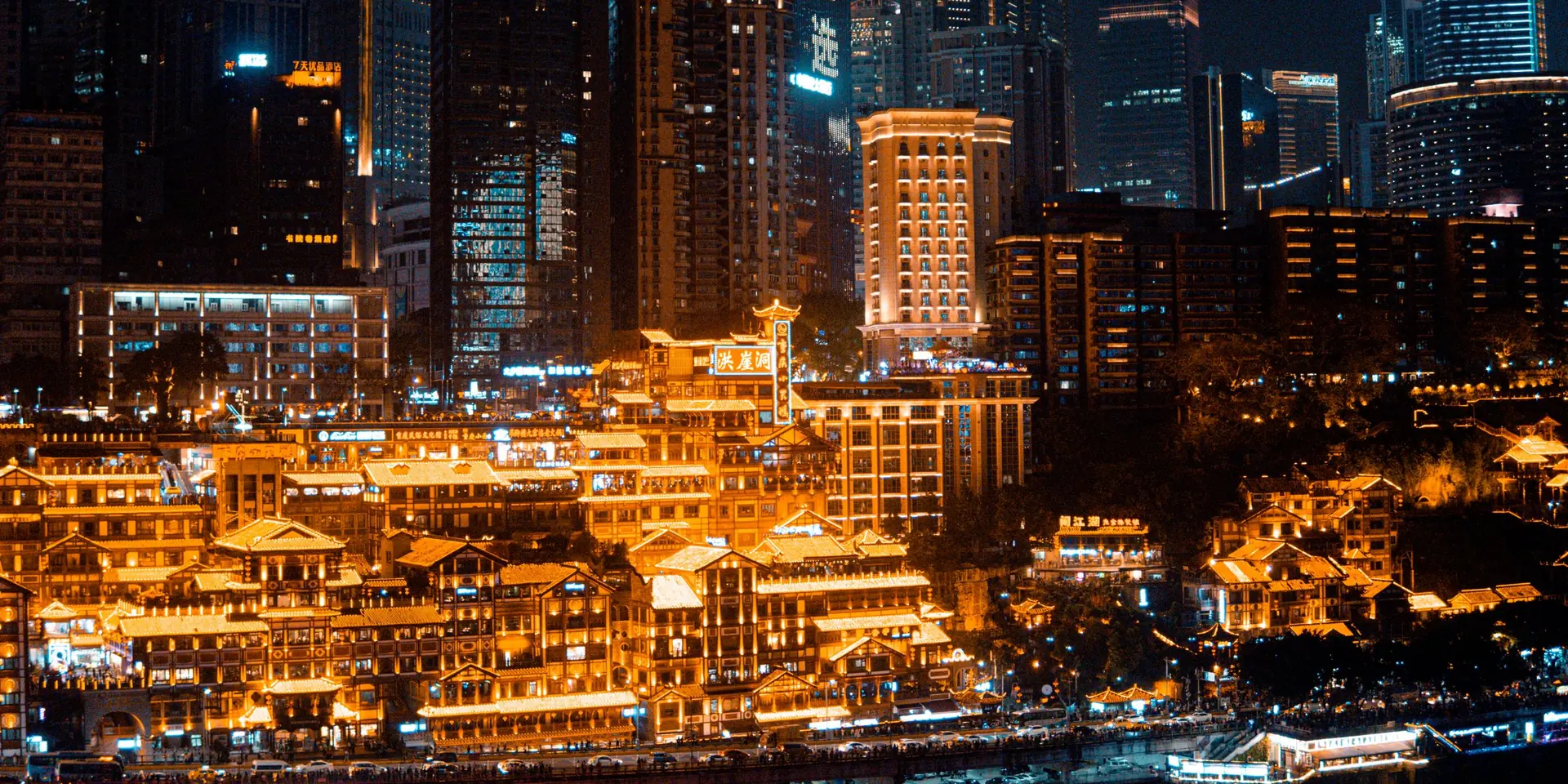
Chengdu and Chongqing Itinerary: Pandas, Hotpot, and Night Views
Do both: five days covers Chengdu and Chongqing (three days in Chengdu, two in Chongqing), six to seven with Leshan, Sanxingdui, or Wulong. High-speed trains from Chengdu East take about 1 h on the fastest runs and 1 h 15 min–2 h on most. Pick Chengdu alone for pandas and teahouses, Chongqing alone for night views and hotpot. Book the Panda Base (real-name, up to 14 days ahead) before you fly. China Travel X: private custom, small groups, no forced shopping stops; pricing on request.
Frequently asked questions
What is the best month to visit China?+
When should I avoid travelling to China in 2027?+
How much does a 10-day private trip to China cost?+
Is winter a good time to visit China?+
Can I still visit China visa-free in 2027?+
Planning updates by email
Seasonal route notes, permit reminders, and new guides—no booking spam.
Want us to check your dates against the calendar?
Message WhatsApp (+86 177 2263 6816) with your travel window, arrival and departure airports, number of travellers, hotel level, and the places you have in mind. We check holidays, capped sites, and regional weather before we suggest a route. Private custom or your own small group. No shopping stops. Hotels, trains, flights, cars, and guides booked inside the journey. Pricing on request.