How to Plan a China Study Tour for Schools (2026)
By Alex Chen
Published September 17, 2026 · Updated September 17, 2026

Ready to plan your trip?
WhatsApp, email, or our trip inquiry form—usually within 24 hours.
Overview
Start 6–8 months out: lock learning outcomes and dates first, then match cities to the curriculum, confirm entry rules by nationality, and use licensed bilingual ground handling. China Travel X assists with invitation letters and visa documentation when a visa is required; consulates and immigration make the final decision. Private or small-group study tours, no shopping-stop itineraries.
Key takeaways
- Lock learning outcomes and assessment artefacts before city names—heritage, STEM, language, or civic comparison each produce a different route.
- Most school groups need 7–14 days on the ground; a 5–6 day window is one city (or two with almost no buffer), not a three-city sprint.
- Eligible ordinary passports may enter visa-free for study-tour or summer/winter-camp purposes of 30 days or less where the policy applies; US and other non–visa-free passports need a visa path. China Travel X assists with invitation letters and documentation—consulates and immigration decide.
- Match cities to the curriculum: Beijing–Xi’an for heritage; Shanghai–Shenzhen for innovation and STEM; an 8–10 day mix only if one spine stays in focus.
- Private or small-group study tours with licensed bilingual ground handling and no shopping-stop itineraries—start on /plan or WhatsApp.
Planning advice
11 min read
Who this guide is for (and not)
This guide is for:
- School leaders, heads of department, and trip coordinators planning a China study tour for schools in 2026
- Teachers who already know the learning outcomes (heritage, STEM, language, civic comparison) and need a private itinerary that can carry those outcomes
- International schools, independent schools, and small university-prep groups that want private custom or small-group travel—not a coach with shopping stops
- Groups whose passports mix visa-free and visa-required nationalities and need a single ground partner to keep paperwork and days aligned
This guide is not for:
- Families booking a leisure holiday that happens to include teenagers (start with how many days in China instead)
- Degree-seeking X1 / X2 study visas or semester-abroad placements—this page is short-stay study tours and camps, not enrolment
- Shopping-stop “China in a week” packages, factory-showroom days, or commission retail itineraries
- Anyone who wants China Travel X to issue or guarantee a visa. We assist with invitation letters, supporting documents, a checklist, and timing. Visa issuance is decided by the consulate or immigration authorities.
China Travel X designs private custom and small-group journeys with no shopping-stop tours. We can arrange flights and hotels as part of the study-tour journey. We are not an OTA.
Start with learning outcomes, not landmarks
The groups that come home with usable work are the ones that lock what students must be able to explain before they lock the Forbidden City or a Shenzhen lab.
Write the outcomes first:
- Heritage and primary sources — imperial capitals, museums, city walls, and how a state tells its own history
- STEM and innovation — how a manufacturing and software city actually works (orientation, not a shopping floor)
- Language and daily life — structured Mandarin practice plus neighbourhood tasks, not a theme-park “old town”
- Civic comparison — how transport, housing, and public space differ from home, with a debrief the same evening
Then attach assessment artefacts: a sketchbook, a lab notebook, a recorded interview, a mapped walking transect. Landmarks become evidence, not the brief.
A Beijing–Xi’an heritage arc and a Shanghai–Shenzhen innovation arc are different products. Mixing both into one exhausted week usually produces airport carpet and no artefact. If you also want pandas or sandstone pillars, that is a later block—see how many days in China and Zhangjiajie–Guizhou—not a bolt-on to a first school tour.
China’s inbound recovery and visa facilitation in 2025–2026 have made short educational visits more practical than they were in the early 2020s. That is context, not a reason to skip outcomes. Chinese officials have also described a US youth-exchange rebound—about 14,000 young Americans in the first year of a five-year invitation initiative, as stated by China’s ambassador to the United States in December 2024. Treat that as exchange-policy context, not as the size of the inbound school-tour market, and not as a quota you can book against.
How long and when to travel
Start 6–8 months out. Lock learning outcomes and term dates first, then match cities, then confirm entry rules by nationality.
| Days on the ground | Realistic scope | Typical use |
|---|---|---|
| 5–6 | One city, or two cities with almost no buffer | Exam-window add-on; not a first China study tour |
| 7–8 | Two cities, one theme | Heritage or STEM, not both |
| 10–14 | Two cities done properly, or a focused 8–10 day mix | Default school study tour |
| 15+ | Two themes with rest days, or a regional add-on | Second-year groups; not a first sprint |
When to travel
- Late March–May and September–November: milder weather in Beijing and Xi’an; fewer domestic holiday crushes than October Golden Week
- Summer (late June–August): the school-holiday window most overseas groups actually have; heat in Beijing, Shanghai, and Shenzhen; book museum workshops and campus visits early
- Avoid Chinese New Year and Golden Week unless the educational reason is specifically to observe a holiday—hotels, rail, and museum tickets behave like a different country
Build arrival-day recovery and one indoor backup morning into every week. A study tour that treats Day 1 as a full Forbidden City assessment will lose the artefact.
High-speed rail makes Beijing–Xi’an and Shanghai–Shenzhen realistic if you count transfer days as teaching-light. China Travel X can include those domestic legs—and hotels—inside the same private journey.
Share dates and year-group
Entry and visas — what China Travel X helps with
Entry rules are passport-specific and they change. Do not copy a blog’s country list onto a 2026 departure. Confirm stay length, purposes, and ports on China’s National Immigration Administration and on the Chinese embassy or visa centre FAQ for your consular district before you buy group flights.
Visa-free, where the policy applies
For eligible ordinary passports, China’s unilateral visa-free policy has, in official FAQs, included study tours (including summer/winter camps) for stays of no more than 30 days, alongside business, tourism, family visits, exchange, and transit. Beijing’s foreign-affairs FAQ states that visa waiver applies to those study-tour and camp purposes when the stay is ≤30 days and a valid ordinary passport is held (Beijing FAO English FAQ).
That is not a global waiver. The country list, stay clock (typically counted from the day after entry), and permitted purposes are official questions—reconfirm them inside 30 days of departure.
United States passports, and other passports not on the visa-free list, need a visa path. Do not plan a US school group as if visa-free rules will cover them.
Formal degree study, work, and journalism are different purposes. A short study tour is not an X1 / X2 enrolment visa.
What China Travel X actually does on visas
When a visa is required, we assist with:
- Invitation / invitation-letter support aligned to the itinerary we are building
- Document checklist (passports, photos, forms, hotel and flight evidence, school letters, parental consent)
- Timing so consular processing sits before non-refundable group tickets
- Bilingual explanations of what the itinerary is—and is not—so the file matches a study tour rather than a shopping package
We assist with documentation and invitation support; visa issuance is decided by the consulate or immigration authorities. We do not sell visas, we do not stamp passports, and we do not promise approval.
Border inspection still examines each traveller. Eligible visa-free visitors can still be refused if purpose, passport, or stay length does not match current rules.
If your group mixes visa-free and visa-required students, we sequence the shared calendar around the slower passport—not around the most optimistic one.
Related reading: Visa & entry requirements (planning overview; policies move—confirm on NIA and your embassy).
Ask about invitation letters and visa docs
Sample city frameworks (not fixed packages)
These are frameworks, not SKUs. We rewrite them around your outcomes, year-group, and visa window.

Beijing–Xi’an — heritage and primary sources
Theme: how imperial capitals present history, urban form, and museum evidence.
- Beijing (北京): Palace Museum (故宫博物院), Temple of Heaven (天坛), a hutong walking transect, and a Great Wall section chosen for teaching access rather than peak-crowd fame
- Xi’an (西安): Terracotta Warriors (秦始皇帝陵博物院), city wall (西安城墙), Muslim Quarter as a food and urban-history block—not a souvenir gauntlet
High-speed rail links the two cities. Keep one teaching-light transfer day. This framework is the usual 7–10 day heritage study tour.
Shanghai–Shenzhen — innovation and STEM
Theme: how contemporary Chinese cities organise finance, logistics, and technology—orientation, not a retail tour.
- Shanghai (上海): Bund (外滩) and Pudong as a skyline-and-port reading; a museum or planning-exhibition morning; one neighbourhood comparison (for example the Former French Concession) with a written transect
- Shenzhen (深圳): a bilingual innovation-city orientation (waterfront, planned districts, how a manufacturing-and-software city is laid out). This is not Huaqiangbei shopping and not a factory-commission day
Pair Shenzhen with a Pearl River Delta context only if the outcome needs it. Do not add a shopping-stop furniture circuit onto a school brief.

8–10 day mix — one spine, one contrast
Ten days can hold one spine plus one contrast, not two full themes:
- Days 1–6 Beijing heritage; 7–10 Shanghai modern-city reading or
- Days 1–5 Shanghai; 6–10 Shenzhen STEM orientation or
- Days 1–7 Beijing–Xi’an; 8–10 one recovery-and-synthesis city, not a third icon sprint
If the brief also wants pandas or Zhangjiajie, add days—or save them. See how many days in China.
Ready to match a framework to your curriculum? Plan a trip or message us on WhatsApp with year-group, dates, and outcomes.
Match cities to your curriculum
Safety, supervision, and what a ground partner does
A school study tour is a duty-of-care product. Landmarks are the easy part.

Supervision (planning practice, not a claim of Chinese statute): we typically plan one adult to 6–10 students, tighter for younger years and for underground or wall days. Your school’s own policy wins when it is stricter. We do not replace the travelling teachers; we make their ratios usable on the ground.
What licensed bilingual ground handling actually covers:
- Pre-arrival briefing: payments, eSIM, WeChat, what students may photograph
- Licensed local guides and vehicles sized for the group—not a shopping-stop coach
- Timed museum and site tickets, including student-workshop slots where they exist
- Hotel check-in with foreign-guest registration, rooming lists, and night-time duty contacts
- A written incident path: nearest international-friendly clinic, embassy/consulate contacts, and who calls whom
- 24-hour coordinator for missed trains, fever, or a lost passport
Every traveller on a China Travel X private journey receives one complimentary China eSIM—10 days / 3 GB or 15 days / 5 GB (one eSIM per person)—so teachers can message, map, and pay from day one in covered cities.
We are not the school’s designated safeguarding lead. We are the ground partner that keeps the safeguarding plan executable in Chinese cities.
Budget reality (ranges on request — no fake fixed prices)
There is no honest public package price for a private school study tour. Headcount, hotel class, season, city pair, workshop fees, and whether flights sit inside the journey move the number more than any landmark list.
What we quote after a brief:
- Ground: licensed guides, private vehicles, tickets, workshops, bilingual coordination
- Hotels: the class your duty-of-care and budget actually allow (twin/triple rooming changes the math)
- Domestic rail or flights inside China, when they belong on the itinerary
- International flights, when you want them arranged as part of the journey—not as an OTA checkout
- Invitation-letter and visa-documentation support when a visa is required (consular fees remain yours)
We do not publish a fake “from $X,999” school-tour SKU. Share year-group, headcount, dates, and hotel band on Plan or WhatsApp and we will return a range that matches that brief.
Complimentary eSIM (10d/3GB or 15d/5GB) is included for travellers on the private journey. Museum tickets and special workshops are itemised.
Plan this study tour with China Travel X
If the outcomes, dates, and passport mix are even roughly known, that is enough to start.
- Open Plan a trip with year-group, headcount, dates, and the learning outcomes you already wrote
- Or message us on WhatsApp from this page—the preset asks for a school study tour without shopping stops
- If you need email: g9355080@gmail.com
We will come back with a city framework, a supervision sketch, a visa/visa-free split, and—when a visa is required—an invitation and document checklist. We assist with documentation and invitation support; visa issuance is decided by the consulate or immigration authorities.
Private or small-group study tours. No shopping-stop itineraries. Flights and hotels arranged as part of the journey when you want them. Not an OTA.
Start the 2026 school study tour brief
Last Updated
This guide was reviewed 17 September 2026 against China Travel X private/small-group study-tour practice, complimentary eSIM options, and publicly posted visa-free FAQ language on study tours and summer/winter camps. Visa-free country lists, stay length, and consular rules change—confirm on the National Immigration Administration and your embassy or visa centre within 30 days of departure.
Sources
- China National Immigration Administration (English) — visa-free, transit, and entry rules by passport
- FAQs on Visa-free Entry into China — Beijing FAO (English) — study tours and summer/winter camps ≤30 days where the waiver applies
- Chinese Visa Application Service Center — consular-district FAQs and application channels
- Chinese Embassy in the United States — Ambassador Xie Feng remarks, December 2024 — about 14,000 young Americans in year one of a five-year youth-exchange invitation (policy context, not a market-size claim)
- Related CT-X reading: how many days in China, visa & entry, Zhangjiajie–Guizhou private trip
Related destination
Explore the regional hub for practical info, seasons, and more guides.
Explore journeys
Sample routes to spark ideas. Every trip is customized—these are not fixed packages.
Related guides
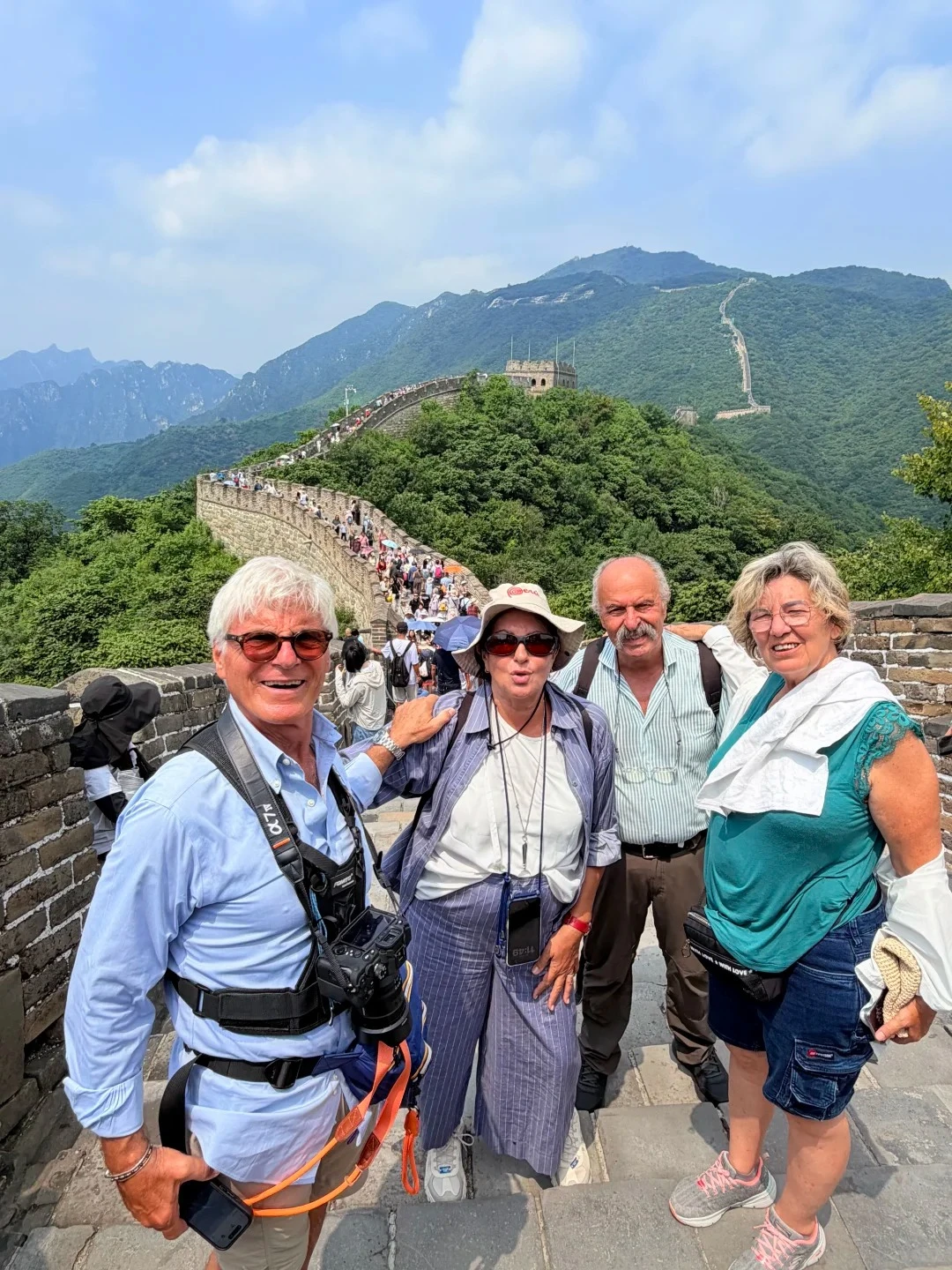
How Many Days Do You Need in China? 7, 10 & 14-Day Private Routes
For a first trip to China, 10–14 days on the ground is the sweet spot. Seven days works for two cities; 21 days is a deep regional add-on, not “see everything.” Private 7/10/14-day routes cover Beijing–Xi’an–Shanghai plus optional Chengdu or Zhangjiajie. Private custom or small groups, no shopping-stop tours, $180–$380 pp/day (2–6 pax). Confirm visa-free rules on the National Immigration Administration.

Zhangjiajie and Guizhou: Avatar Mountains Without a Shopping Tour
Plan about 3–4 full days in Zhangjiajie for the sandstone Avatar pillars, then 2–4 in Guizhou for Miao or Dong village time. Seven to nine days covers both without stacking glass bridges and shopping stops. Private custom or small groups, no shopping-stop tours. Flights and hotels can sit inside the journey. Complimentary eSIM: 10 days/3 GB or 15 days/5 GB.
Is Yunnan Right for Your First China Trip?
Choose Yunnan if you have 8–10+ days, want villages and markets over desert distances or Tibet permits, and accept $180–$380/day for a private driver-guide (2–6 pax). Pick north highlands OR tropical south—not both in a week. Spring and autumn are the first-timer windows; Shangri-La needs altitude pacing. Wallets beat cards.
Frequently asked questions
Can you help with China visas for a school study tour?+
Do students from visa-free countries still need a visa for a China study tour?+
Do US students need a visa for a school study tour to China?+
How long should a school study tour to China be?+
Which cities work for a first China study tour?+
What adult-to-student ratio do you plan around?+
Do you book flights and hotels for a school group?+
What does a China school study tour cost?+
PRACTICAL INFO
Plan your trip
Planning updates by email
Seasonal route notes, permit reminders, and new guides—no booking spam.
Ready to plan a 2026 school study tour?
Message us on WhatsApp with year-group, dates, and learning outcomes—we will propose a private or small-group study tour without shopping-stop itineraries.